Free U.S. Shipping on Orders $150+Professional-grade recovery. Built to perform.
logo
Your cart is currently empty.

RECON B2B — Commercial Activate / Circulate Hub

// Commercial Pillar Hub — Activate / Circulate

The Commercial Activate / Circulate Recovery System Built for Operators

Compression is the workhorse, but it's only one layer. The full Activate / Circulate pillar runs from pneumatic compression boots and 8-chamber commercial systems through percussion and contrast-therapy tools, cryo rollers, and vibrating manual recovery — the complete mechanical-recovery layer your facility needs to deliver lymphatic flush, fascial release, inflammation management, and daily maintenance under one product line. If your competitor offers compression and nothing else, you outflank them with the full Activate layer at a better price.

Compression is table-stakes. The complete Activate layer is the differentiator. Pneumatic compression for systemic lymphatic flush. Percussion guns for fascial trigger points. Cryo rollers and wraps for targeted inflammation. Vibrating foam roller and vibrating peanut for daily maintenance. 260 mmHg peak compression · 5 percussion + cryo SKUs from $55 to $250 · Sub-$1K commercial system pricing. The operator-grade Activate layer that lets you compete with chains on amenity AND outsell them on recovery menu depth.
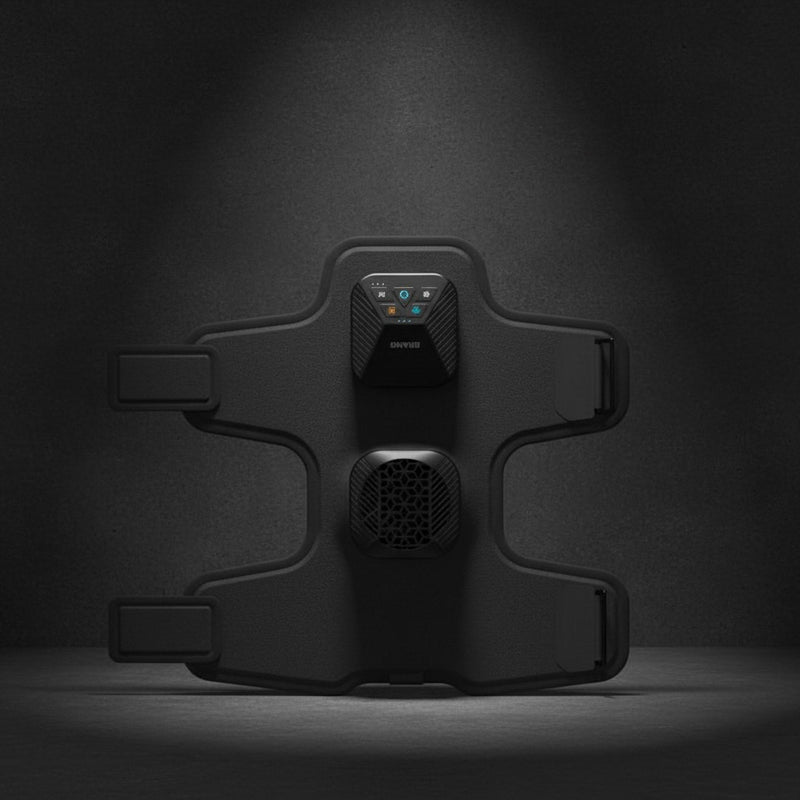
RECON Pro Compression Boots in use at a premium training facility — pneumatic recovery as the post-session amenity members expect from a serious gym

Quick Answer

RECON Wellness’s commercial Activate / Circulate system — Pillar 01 of the Integrated Recovery System — is the complete mechanical-recovery layer for commercial deployment. Pneumatic compression (Pro Compression Boots $575, Elite Compression System $649 with arm and hip attachments at 260 mmHg) handles post-workout lymphatic flush and pre-session warmup. Percussion tools (Pulse Massage Gun $150 flagship, Deep Pulse Massage Gun $129 with hot/cold contrast head) handle fascial work and trigger points. Cryo tools (Cryo Roller $250 with detachable freezable core, Cryo Wrap $175 dual-joint knee/shoulder with infrared + contrast + vibration) replace the ice bath in a 40-square-foot footprint. Manual vibrating tools (Power Roller $85 vibrating foam roller, Power Ball $55 vibrating peanut massager) anchor daily maintenance and Drop-Ship Affiliate revenue. Partner pricing 20% to 35% off MSRP across three tiers (Station, Room, Suite). Built for gyms, fight gyms, climbing gyms, recovery centers, racquet clubs, PT clinics, and any facility where members spend time on their feet and recover on their backs.

// Why Operators Anchor on Compression First, Then Add the Full Activate Layer

Compression Is the Member-Expected Modality. The Full Activate Layer Is the Differentiator.

Major fitness chains already include compression therapy as a standard member amenity. Premium independent gyms, recovery studios, and PT clinics are catching up — fast. The facility that doesn't have compression in 2026 is the facility members shop competitors over. But compression alone isn't the win — it's the entry point. Operators who stack the full Activate / Circulate layer (compression for systemic flush, percussion for fascial work, cryo for targeted inflammation, vibrating manual tools for daily maintenance) deliver a deeper recovery menu, capture more revenue per member, and lock out competitors who only carry one piece of the layer. RECON makes the upgrade economical at every tier: more powerful spec sheet than the category default, at a fraction of the brand-name commercial pricing, across 8 SKUs from $55 to $650 that round out the complete mechanical-recovery floor.

$30–50
Monthly Premium Tier Upcharge Per Member
260
mmHg Peak Pressure (vs ~110 Category Standard)
1–2%
Churn Reduction = 12–24% LTV Lift
// Operator Deployments

How Operators Configure Compression in Live Facilities

Two configuration patterns running today. The RECON Elite Compression System ($649) is the primary commercial recommendation — staged in dedicated compression bar layouts at gyms, recovery studios, and PT clinics, with optional modular arm/hip attachments for clinical coverage. The Pro Compression Boots ($575) remain available for sports teams, traveling athletes, and mobile/lodging deployments where wireless portability matters more than facility infrastructure. Direct operator quotes and full case studies in the next content release.

// Elite Compression System · Multi-Station Configuration
The Recovery Bar Layout

Operators set up 2–4 Elite Compression Systems on rolling carts in a dedicated recovery bar. Members rotate through 15-to-20-minute sessions — often paired with overhead red light or adjacent PEMF stations. The 8-chamber gradient supports both Recovery Mode (100–180 mmHg) for routine members and Vascular Performance Mode (200–260 mmHg) for advanced protocols. Modular arm and hip attachments expand coverage for upper body and pelvic regions.

Pattern · Performance Gyms and Recovery Studios
// Pro Compression Boots · Portable Configuration
The Mobile and Team Application

Wireless 240 mmHg compression in a travel-first form factor. Sports teams stage Pro Boots on team buses, in locker rooms, and at competition venues for between-game recovery. Traveling athletes pack them in carry-on. Operators running mobile recovery services or hotel/lodging partnerships use them as the lowest-friction footprint version of the same vascular performance mechanism that the Elite system runs at higher pressure ceilings.

Pattern · Sports Teams · Travel · Mobile Recovery
// Mechanism Explorer

Commercial Compression Therapy Mechanism Map

Most consumer-class pneumatic compression caps at 100–110 mmHg — sufficient for lymphatic flush but below the venous occlusion threshold where reactive hyperemia cycling activates. Three views into how 240–260 mmHg compression changes the mechanism: Pressure Zones, Vascular Mechanism, and the operator Protocol Matrix.

~110 mmHgConsumer Class
100–180 mmHgRecovery Mode
200–260 mmHgVascular Performance
260 200 160 100 60 0
PARTIAL ARTERIAL RESTRICTION THRESHOLD ↑
VENOUS OCCLUSION THRESHOLD ↑
~110
Consumer Class
100–180
Recovery Mode
200–260
Vascular Performance
Recovery Mode — 100 to 180 mmHg
The default operator setting for routine member sessions. Sufficient pressure for venous return and lymphatic flush — clears interstitial fluid, supports metabolic waste removal, and increases circulation in working tissue. The mode most members use, most of the time.
Expert: operates above resting venous pressure (~10–20 mmHg) and within standard recovery compression range. Lymphatic flush and venous return are the dominant mechanisms. Appropriate for post-training recovery, daily maintenance, and travel-related leg fatigue.
Important compliance distinction: This is not blood flow restriction training. BFR training benefits require active muscle contraction under restriction. RECON compression is passive — supporting the vascular mechanism (reactive hyperemia, endothelial shear stress, NO production) without the metabolic stress of exercise-under-occlusion. The lane is vascular conditioning and recovery, not muscle hypertrophy.
Vascular Performance Mode (200–260 mmHg) recommended 1–2× per week maximum on the same limb, with 48+ hours between high-pressure sessions. Screen for contraindications before recommending high-pressure mode: uncontrolled hypertension, recent DVT, vascular surgery, known clotting disorders, pregnancy. Recovery Mode (100–180 mmHg) is the default for routine member protocols.
260mmHg Peak (Elite)
8Sequential Chambers
DualMode (Recovery + Vascular)
FDAClass II Reg · Operator Kit
// Amenity-Tier Economics

Commercial Recovery Amenity-Tier ROI Calculator

The real operator question isn't "how many compression sessions can I bill per day?" — it's "how much can I charge my members for premium-tier access to a fully equipped recovery suite?" Model your member base, premium tier upcharge, and equipment investment below.

Monthly Amenity Revenue
$4,000
at selected inputs
Payback
1 mo
to break even
Year 1 Net
$45,404
post equipment
5-Year Revenue
$240,000
amenity-tier gross
// THE CHURN BONUS (not in the math above)Premium amenity tiers reduce membership churn — members who use specialized recovery don't shop competing gyms. Industry-modeled at 1–2% churn reduction = 12–24% member lifetime value lift. The amenity-tier upcharge is one revenue stream; member retention from "they don't need to leave for what they want" is the second, often larger one.
Conservative model. Real-world premium-tier conversion ranges from 8–15% at facilities introducing the amenity for the first time, scaling to 25–40% at facilities with mature recovery programming and clear member communication. Equipment cost does not include facility space, install labor, or marketing.
// Throughput Math

Daily Compression Session Capacity Calculator

Different question than payback — this is "what's my throughput ceiling?" Model your facility hours, session length, and station count to see daily and monthly capacity at full booking.

Max Sessions / Day
80
across all stations
Monthly Capacity
2,080
at 26 business days
Monthly Revenue Ceiling
$52,000
at $25 / session
Ceiling math — assumes 100% booking, zero transition time between sessions. Real throughput averages 60-75% of ceiling at mature operations. Build session length to include 2-3 minute reset between bookings.
// Match the System to the Operation

Commercial Compression for Gyms, PT Clinics, Sports Teams, and Travel

Both RECON commercial compression systems operate at high-pressure thresholds. The right configuration depends on facility infrastructure, mobility requirements, and modularity needs.

// Performance Gym · Recovery Studio
Multi-Station Recovery Bar
Deploy 2–4 Elite Compression Systems on rolling carts. Members rotate through 15-minute sessions. Pair with overhead red light or adjacent PEMF stations for layered protocol sessions. The 8-chamber gradient + modular attachments support both routine and advanced member protocols from a single hardware footprint.
Anchor with 2–4× Elite Compression Systems ($649 each)
// PT Clinic · Chiropractic · Rehab
Clinical Modular Configuration
Elite Compression Systems with the Hip and Arm Attachments expand coverage for upper body, shoulders, hips, and pelvic regions. Critical for post-surgical recovery protocols, lymphatic clearance after orthopedic procedures, and clinical rehab applications where lower-body-only configurations limit treatment scope.
Build with Elite + Hip + Arm modular stack ($949)
// Sports Teams · Traveling Athletes
Portable High-Pressure Coverage
Wireless Pro Compression Boots at 240 mmHg deliver vascular performance compression in a travel-first form factor. Team buses, locker rooms, competition venues, hotel rooms. The same physiological mechanism as the Elite at slightly lower peak pressure, with no facility infrastructure required.
Equip with Pro Compression Boots ($575)
// Mobile Recovery · Hotel · Lodging Partner
Wireless Service Delivery
Operators running mobile recovery services, hotel partnerships, or adventure lodging recovery stations use Pro Compression Boots as the lowest-friction commercial deployment. No AC power required, fully wireless, packable. Combine with a portable PEMF mat for a mobile two-pillar offering.
Scale with 2–4× Pro Compression Boots ($575 each)

See the full Elite Compression System lineup with modular attachments →

// Elite Modular Expansion

The Elite Is the Starting Point. Modular Attachments Scale It.

The 8-chamber Elite is the anchor for any commercial compression deployment. From there, the modular ecosystem extends coverage to upper-body and pelvic regions — letting operators specialize the same hardware for sports-specific protocols, clinical applications, and high-output member segments without buying duplicate base systems. The honest framing on each attachment matters: not every add-on fits every facility, and we'd rather tell you that upfront than have you buy something that doesn't deliver for your member demographic.

// Starting Point · Anchor
Elite Compression System ($649)
The 8-chamber sequential pneumatic anchor — full lower-body coverage from feet through hips. 260 mmHg peak pressure across both Recovery Mode (100–180 mmHg) and Vascular Performance Mode (200–260 mmHg). AC-powered for facility runtime. Every commercial compression deployment starts here. The modular attachments below extend the same control unit to additional body regions — no duplicate base systems needed.
Anchor every deployment with: Elite Compression System ($649)
// Sports-Specific Add-On
Arm Attachments ($125)
Targeted upper-body sequential compression for racket sports, throwing sports, climbing, and any member segment where arm recovery is the protocol focus. The clearest fit: tennis courts, pickleball facilities, baseball/softball training centers, boxing/MMA gyms, and climbing-focused facilities. Members in these segments book recovery specifically for the upper body — the arm attachments turn the Elite into a sport-specific solution instead of forcing them onto a leg-only protocol. Cheapest, highest-leverage modular add-on for the right facility demographic.
Add for: Tennis · Pickleball · Throwing · Climbing · Combat sports
// Pelvic / Hip Coverage
Hip Attachments ($175)
Hip flexor, glute, and lower lumbar sequential compression. Honest read: hip attachments work best for mid-to-larger frame members — the design favors broader hip structure, and smaller-bodied users often find the coverage fit suboptimal. Operators serving primarily athletic/larger demographics (powerlifting, football/rugby, larger-frame general population) get real value here. Operators serving primarily smaller-frame demographics (most yoga/pilates studios, cheer/dance facilities, smaller-bodied athletes) should think twice before adding — fit issues are real and members notice. We'd rather you skip a $175 attachment than buy it and not get the value.
Consider for: Larger-frame member demographics · skip for smaller-frame facilities

See Elite Hip Attachment specs →  ·  See Elite Arm Attachment specs →

// The Complete Activate Product Line

Eight SKUs. One Pillar. The Full Mechanical-Recovery Layer.

Compression is the anchor, but the Activate / Circulate pillar is broader: percussion for fascial work, cryo for targeted inflammation, vibrating manual tools for daily member maintenance. Operators who stack the full layer deploy a recovery menu their competitors literally can't match — because most carry one piece, not the whole pillar. The full lineup, with operator pricing and role for each SKU:

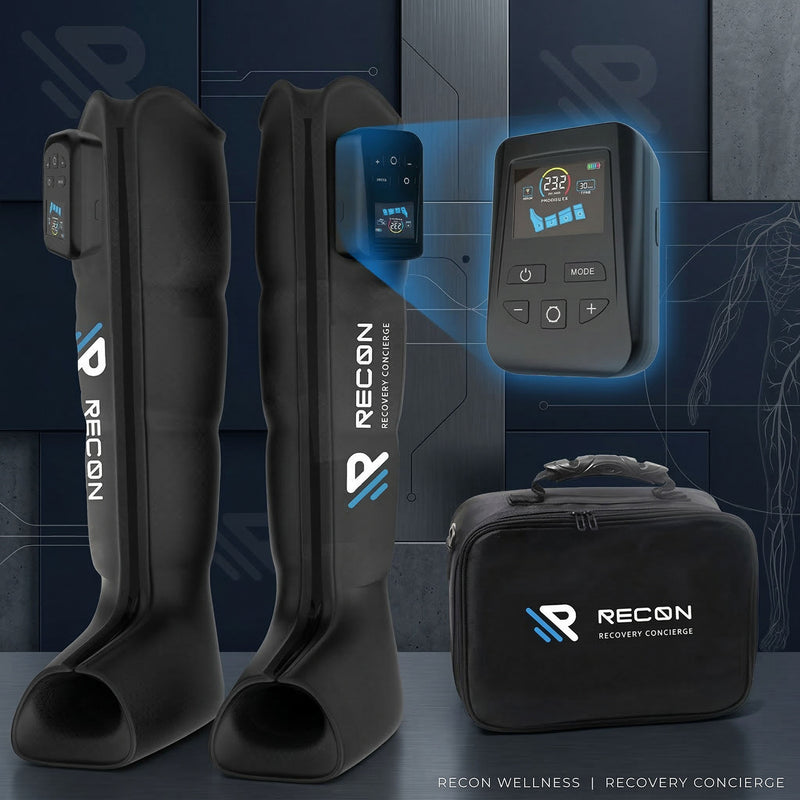
RECON Pro Compression Boots — hose-free wireless pneumatic compression boots for commercial recovery // Compression · Entry
RECON Pro Compression Boots — $575
Hose-free 5-chamber pneumatic boots with dual independent pumps. 30–240 mmHg adjustable, 3 cycle modes (Sequential / Pulse / Wave), 4-zone sequential coverage from feet through thighs, 2.5-hr battery, <55 dB, ~5 lbs per pair. The starter compression SKU operators deploy when budget or footprint is the constraint.
Use as: Entry compression for smaller operators or as second station

View Pro Compression Boots →

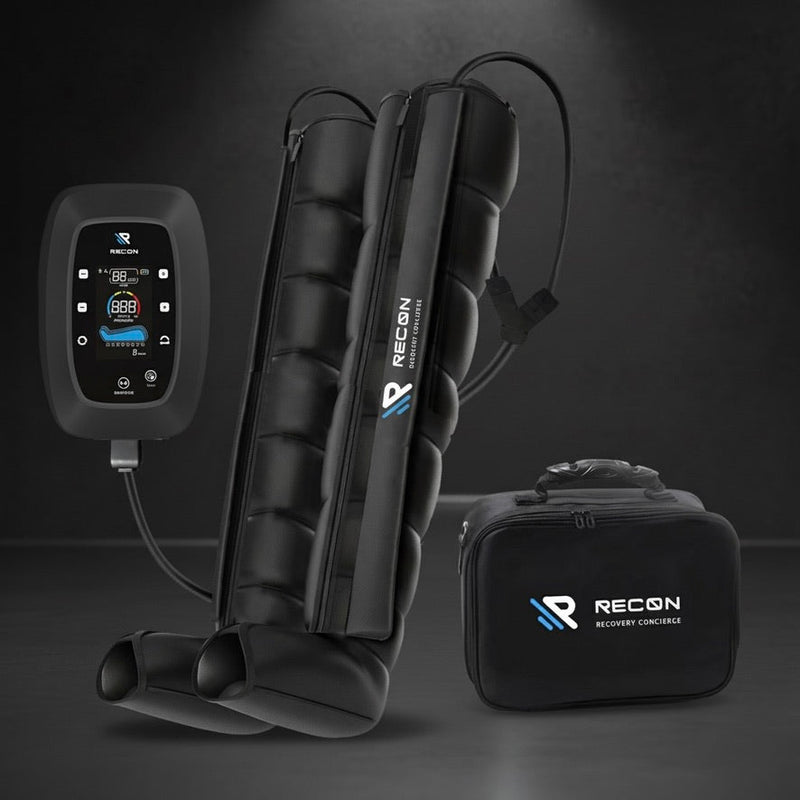
RECON Elite Compression System — 8-chamber commercial pneumatic compression system at 260 mmHg // Compression · Operator
RECON Elite Compression System — $649
8-chamber sequential pneumatic anchor. 30–260 mmHg (vs ~110 mmHg category baseline), 6 compression modes, color LCD, remote, modular hub accepts arm and hip attachments. AC-powered for facility runtime. The anchor every commercial compression deployment starts on.
Anchor every deployment with: Elite Compression System ($649)

View Elite Compression System →

RECON Pulse Massage Gun — flagship 24V brushless percussion gun with hot/cold contrast head for commercial recovery // Percussion · Flagship
RECON Pulse Massage Gun — $150
The flagship percussion tool. 24V high-torque brushless motor, 5 speeds (1,800–3,000 RPM standard / 1,600–2,400 RPM hot/cold head), 5 heads including hot/cold contrast head with 3 cooling levels (50–68°F) and 3 heating levels (107–122°F). <50 dB. 1.71 lbs. The percussion SKU operators add to every recovery zone.
Add to: Every recovery zone · staff training station · member self-serve area

View Pulse Massage Gun →

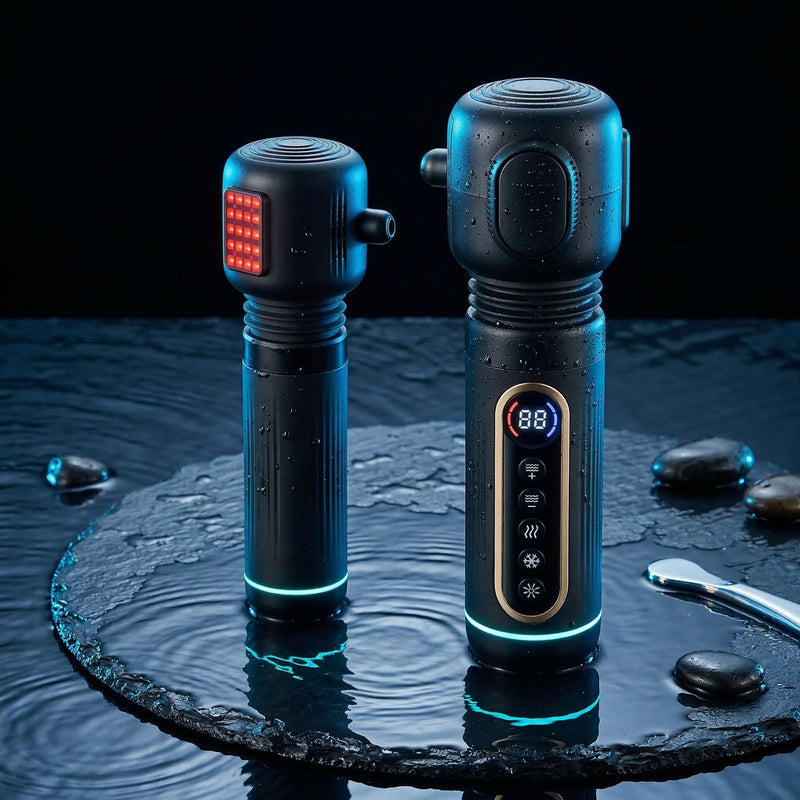
RECON Deep Pulse Massage Gun — vertical flashlight-style percussion tool with 4 heads and hot/cold contrast // Percussion · Premium
RECON Deep Pulse Massage Gun — $129
Vertical flashlight-style form factor (not T-shaped). 10 speeds, 2,500–7,000 RPM. 4 heads: finger pressure (acupressure), red light therapy, cold/hot flat, silicone massage. Heating 104–122°F across 3 levels, cooling 50–68°F across 3 levels. The premium percussion + contrast combo tool for clinical-tier operators.
Add for: PT clinics · chiropractic · functional medicine · med-spa

View Deep Pulse Massage Gun →

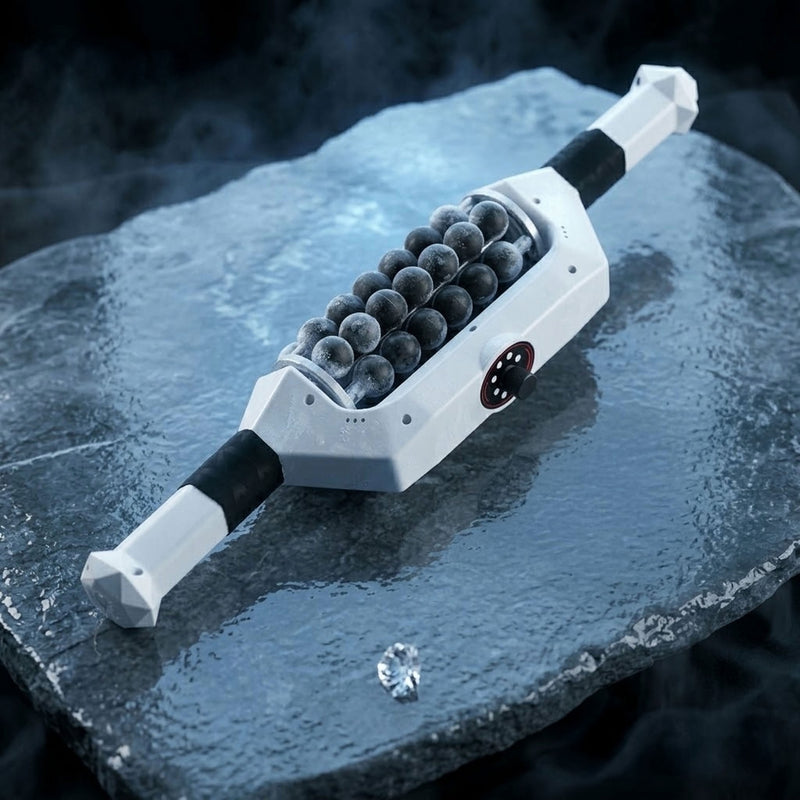
RECON Cryo Roller — cryo-therapy plus percussive massage roller with detachable freezable core for commercial recovery zones // Cryo + Percussion
RECON Cryo Roller — $250
Cryo-therapy + percussive massage roller in one tool. Detachable freezable core (freeze 30 min, reattach for cryo-massage). 4 working modes, dual control knobs, adjustable spin speed. 4-hr battery, 2.76 lbs, 21.65 inches long. The ice-bath alternative that fits in any recovery zone — no plumbing, no drainage, no chiller.
Use as: Cryo without the ice bath · targeted leg and back roll-out

View Cryo Roller →

RECON Cryo Wrap — dual-joint cold and red light therapy device for knee and shoulder // Cryo + Contrast
RECON Cryo Wrap — $175
Dual-joint design fits knee AND shoulder. Infrared light + hot/cold contrast + vibration massage in one wrap. Heating 95–108°F across 3 levels, cooling 46–61°F across 3 levels. 1.76 lbs, member-self-administered. The targeted contrast-therapy SKU for the operator who wants joint-specific recovery without buying separate hot and cold devices.
Add for: Racquet sports · combat sports · climbing · PT · chiropractic

View Cryo Wrap →

RECON Power Roller — vibrating foam roller with digital display for fascial release and daily recovery // Manual · Vibrating Foam Roller
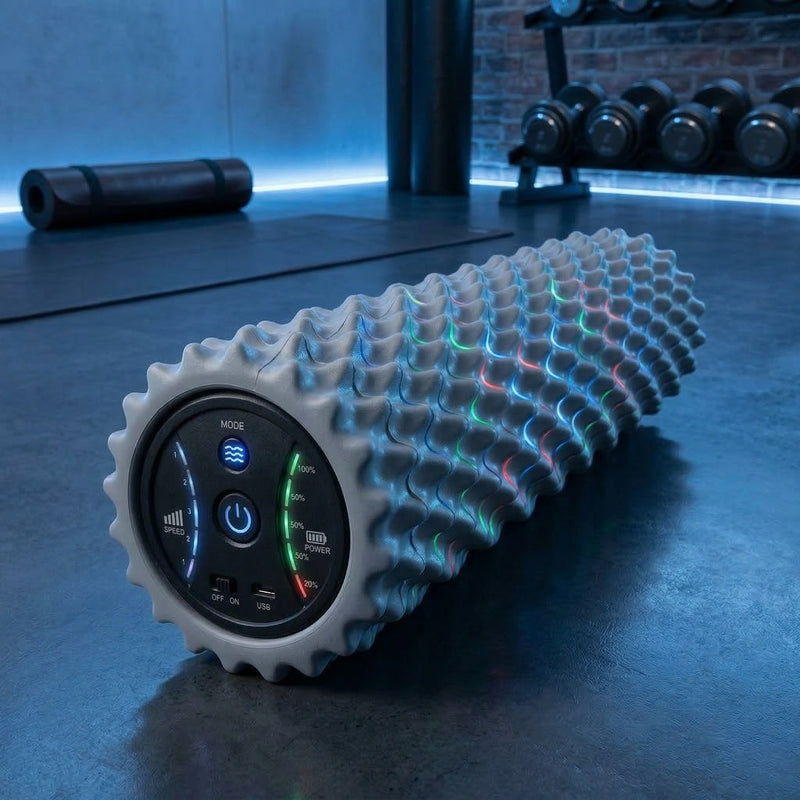
RECON Power Roller — $85
Vibrating foam roller for IT band, lats, glutes, quads, calves, lower back. The daily-maintenance tool members buy at-home AND facilities stock for self-serve recovery zones. Sub-$100 entry point. Strong Drop-Ship Affiliate gateway — every member who tries it in your facility becomes a candidate to buy the at-home version through your co-branded page (20–25% margin).
Stock in: Every recovery zone · member self-serve area · retail wall

View Power Roller →

RECON Power Ball — vibrating peanut massager for spine alignment and targeted muscle release // Manual · Vibrating Peanut
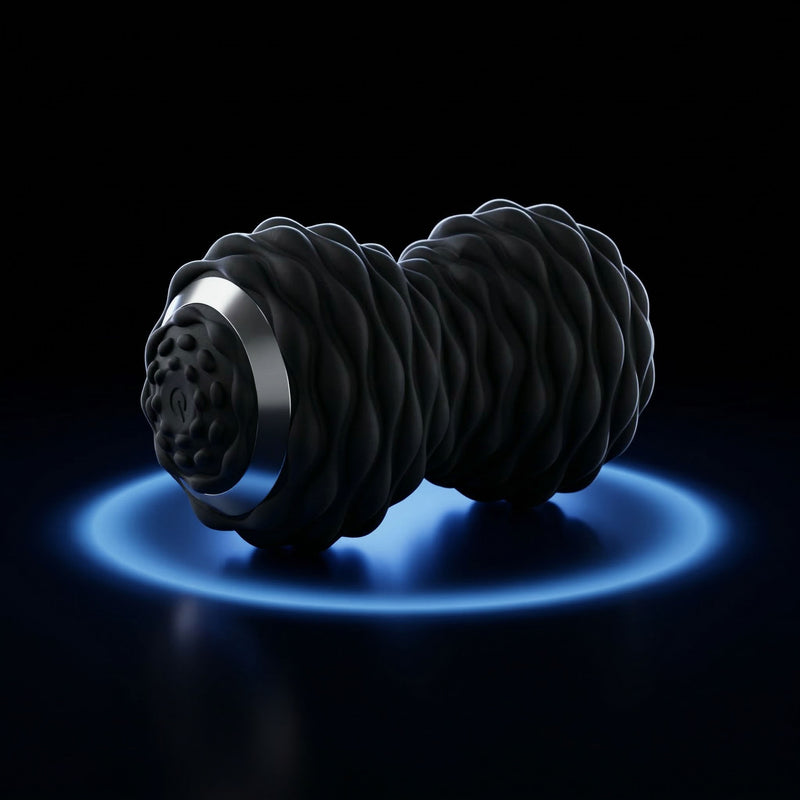
RECON Power Ball — $55
Vibrating peanut massager for spine alignment, suboccipital release, plantar fascia, glute medius, trapezius. The cheapest entry into the RECON product line ($55), and the highest-volume Drop-Ship Affiliate SKU — members try it on the floor, buy it for home use. Stock 5–10 units per facility; rotate through member-direct sale.
Highest-volume retail attach: Stock 5–10 units · member-direct sale loop

View Power Ball →

Partner pricing 20% to 35% off MSRP across Station (one pillar), Room (two pillars), and Suite (three pillars) tiers. The Activate product line counts toward your pillar tier — operators who deploy compression + percussion + cryo + manual at the same time unlock Room-tier pricing on a single-pillar buy.

// Percussion + Fascial Work

The Tool That Lives at Every Recovery Zone, Training Station, and Front Desk

Compression handles systemic lymphatic flush. Percussion handles the trigger points compression can't reach — the IT band knot from a 90-minute spin class, the lat seize-up from a heavy push day, the shoulder pinch from a long climbing session. Operators who deploy compression without percussion leave half the recovery menu on the table. The Pulse Massage Gun is the entry SKU; the Deep Pulse adds the hot/cold contrast head that doubles as a recovery tool for the operator's clinical-tier members.

Percussion tools are also the easiest staff-trained recovery modality. A 5-minute staff orientation covers operation, contraindications, and the three protocols members ask about most (post-workout flush, pre-session warmup, trigger-point release). They're sub-$200 SKUs — meaning operators can stock multiple units across the facility instead of a single shared station, which compounds session throughput on busy nights.

Operator deployment pattern: 1–2 Pulse Massage Guns at the main recovery zone (member self-serve), 1 Deep Pulse at the staff-led recovery table or PT room (premium-tier service), plus optional rotating-stock units for retail at-home sales (Drop-Ship Affiliate flywheel).

// Cryo + Targeted Contrast Therapy

The Ice Bath Alternative That Fits in 40 Square Feet — Without the Plumbing

Cold plunges and contrast tubs are the recovery amenity operators want, but they're also the recovery amenity with the highest infrastructure cost: plumbing, drainage, chiller, GFCI electrical, water treatment, and ongoing maintenance budget. The Cryo Roller and Cryo Wrap give operators the same targeted-inflammation benefit at a fraction of the footprint and zero infrastructure spend. Members self-administer; staff supervise. Deploy in any 40-square-foot recovery zone without touching a contractor.

The Cryo Roller uses a detachable freezable core that loads after 30 minutes in any standard freezer. Members roll cryo into the legs, lower back, or glutes — the same surface area a cold plunge addresses, but targeted to the muscle group that actually needs it. The Cryo Wrap is the dual-joint targeted SKU: it fits the knee or shoulder (the two highest-injury joints for racquet, climbing, fight, and impact-sport athletes), and combines infrared light, hot/cold contrast (95–108°F heating, 46–61°F cooling), and vibration in a single device.

Operator deployment pattern: 1–2 Cryo Rollers in the main recovery zone (member self-serve, rotate freezable cores so one is always cold), 1–2 Cryo Wraps in the targeted-recovery station (members book joint-specific 15-minute sessions). Same revenue model as compression sessions: $15–$30 add-on to day-pass, or bundled into the Performance / Premium membership tier.

// Manual Recovery — Vibrating Tools

The Sub-$100 SKUs That Anchor Daily Maintenance and Drop-Ship Affiliate Revenue

The Power Roller (vibrating massage roller, $85) and Power Ball (vibrating peanut massager, $55) are the cheapest SKUs in the RECON product line — and the highest-volume Drop-Ship Affiliate revenue drivers. Members try them in the facility, build the habit, then buy them at-home through your co-branded RECON page. Operators earn 20–25% margin on every attributed sale with zero inventory and zero capital outlay.

The Power Roller covers the standard foam-roller use cases — IT band, lats, glutes, quads, calves, lower back — with vibration that meaningfully outperforms a flat foam roller for fascial release. The Power Ball is the vibrating peanut form factor for spine alignment, suboccipital release, plantar fascia, glute medius, and trapezius work. Both tools are member-self-administered with no staff training required and no contraindication complexity.

Operator deployment pattern: Stock 3–5 Power Rollers and 5–10 Power Balls per facility (rotating through member-direct sale). Display them on the facility's retail wall with the Drop-Ship Affiliate QR code — members who try in the facility scan the code to buy for home use. This is the single most efficient at-home conversion loop in the RECON commercial model.

// The Human Performance System

Why Commercial Recovery Stacks Outperform Single-Tool Setups

Compression is one of three modalities in RECON's recovery system. Operators who stack all three — mechanical compression, PEMF, and photobiomodulation — deliver more comprehensive sessions, capture higher per-member revenue, and reduce membership churn. The science of layered recovery is the operator economics of layered recovery.

01 // Activate / Circulate · You Are Here

Mechanical Clearance + Reactive Hyperemia

High-pressure intermittent compression at 200–260 mmHg produces occlusion-adjacent conditions during inflation, then reactive hyperemia and endothelial shear stress on release. Research suggests this cycle supports nitric oxide–mediated vasodilation and vascular conditioning. Most consumer-class compression devices cap at 100–110 mmHg and cannot produce the same stimulus.

Mechanism Lymphatic clearance · venous return · reactive hyperemia · endothelial shear stress · NO-mediated vasodilation
The Activate consumer pillar page →
02 // Renew

PEMF + Nervous System Regulation

Pulsed electromagnetic fields interact with charged particles at the cell membrane level, influencing ion flow, cellular communication, and ATP-related signaling. Frequency-specific protocols target brainwave-adjacent states — delta (restoration), theta (plasticity), alpha (calm focus), beta (alertness). A BMJ Open meta-analysis aggregating osteoarthritis trials documents PEMF supporting joint comfort and function.

Mechanism Calcium ion signaling · cell membrane potential · parasympathetic shift · mitochondrial efficiency · cytokine pathway modulation
Commercial PEMF therapy hub →
03 // Restore Red Light

Photobiomodulation + Cellular Energy

Red and near-infrared wavelengths are absorbed by cytochrome c oxidase in mitochondria, supporting ATP production and the cellular environment for tissue repair. Different wavelengths reach different tissue depths — surface (480–630nm) through deep (810–1060nm). The most-studied modality in the photobiomodulation clinical literature.

Mechanism Mitochondrial activation · ATP production · collagen synthesis · tissue repair signaling · spectral specificity
Commercial red light therapy hub →

The Sequencing Rule — Red Light → PEMF → Compression

Each pillar amplifies the next. Red light first pre-conditions tissue with fresh ATP and primes mitochondrial readiness. PEMF second downregulates the autonomic nervous system into a parasympathetic state where cellular repair signaling activates. Compression third clears metabolic byproducts and drives reactive hyperemia through tissue that's already been prepared and regulated. One modality is a session. Three layered modalities is a protocol — and protocols deliver outcomes that single sessions cannot replicate.

The Operator Economics of a Full Recovery Amenity Tier

The right way to model RECON's commercial value isn't per-session billing — it's premium amenity-tier upcharge on your existing member base. Major fitness chains include compression therapy as a standard amenity, and the trend is moving fast — members at premium gyms now expect recovery access included with membership. A facility deploying the full three-pillar RECON stack can charge $30–$50 more per member per month for premium-tier access to compression + PEMF + red light, without billing individual sessions.

Stack math: At a 500-member facility with 20% premium-tier conversion at $40/month upcharge, the full RECON stack (Elite Compression + Renew+ Photon Mat + Blackline Forge — roughly $8,500 loaded) generates $4,000/month = $48,000/year in amenity revenue. Payback lands in roughly 2 months. After payback, the entire amenity-tier upcharge is gross margin — plus the harder-to-measure but often larger churn-reduction lift from members who don't go shop the competition.

See the RECON Renew PEMF lineup →  ·  See the Restore Red Light lineup →

// Commercial Category Comparison

How RECON Compression Compares to the Commercial Pneumatic Compression Category

Operators do this comparison anyway. We did it for you — without naming names. Categories shown are functional pressure classes within the commercial pneumatic compression market. Specs reflect publicly listed manufacturer data across each class as of May 2026 — confirm current specs with each vendor before purchasing.

RECON Elite Consumer Pneumatic Class
D2C-Origin
Mid-Pressure Recovery Class
200 mmHg Tier
Clinical Lymphedema Class
Medical-Grade
Peak Pressure 260 mmHg ~100–110 mmHg ~200 mmHg 80–120 mmHg
Compression Chambers 8 sequential 4–6 4–6 3–4 sequential
Power Source AC (Elite) · Wireless (Pro) Wireless (Battery) Mixed AC only
Modular Attachments Arm + Hip Some (arm only) None / Limited Multi-region (medical)
Reactive Hyperemia Mode Yes (200–260 mmHg) No (below threshold) Marginal (at threshold) Not the target use
Commercial MSRP $575–$949 $700–$1,200 $800–$1,500 $2,500–$10,000+
Warranty 2-year 1–2 year 2-year Medical-grade (varies)
Onboarding Included Yes — operator kit No No Clinical training
Support Location US — direct line Distributed Distributed Medical channels

Consumer pneumatic compression is the dominant retail category — wireless, lifestyle-positioned, focused on lymphatic flush at sub-occlusion pressures. Mid-pressure recovery devices have emerged in the prosumer space at the venous occlusion threshold but typically lack reactive hyperemia mode headroom. Clinical lymphedema compression is a separate regulated category for medical conditions, not athletic recovery. RECON Pro and Elite occupy an operator-grade niche between consumer and clinical — high-pressure recovery without the medical-device price point or regulatory positioning.

// Risk Reversal

The 30-Day Activation Guarantee

30-Day Activation Guarantee

If your facility doesn't book at least 40 paid compression sessions in the first 30 days per Elite System, RECON flies out and runs a co-branded launch event at our expense — or refunds your deposit in full. One condition: you execute the activation protocol (we provide the assets; you hit publish).

Every commercial order also includes the RECON Operator Onboarding Kit — staff training materials, member screening protocols (high-pressure mode contraindications), session launch templates, and direct ops support. Compression has the fastest activation cycle of any recovery modality.

// FAQ

Commercial Compression Therapy — Operator Questions Answered

Ten questions operators ask before ordering. Plain-English answers backed by RECON's published specs and the documented physiology of pressure-threshold compression.

Yes. Commercial pneumatic compression is one of the most established service categories in performance recovery facilities — and one of the fastest to set up. Operators run 15-to-20-minute compression sessions at $20–$40 each as drop-ins, packages, or recovery memberships. A single Elite Compression System ($649 MSRP) supports back-to-back sessions across an entire facility day. The fastest-payback recovery modality in the RECON system.

Pressure above 200 mmHg crosses a meaningful physiological threshold. At 200–260 mmHg, sequential pneumatic compression operates above the venous occlusion threshold and creates partial arterial restriction during the inflation phase. When pressure releases, the rapid reperfusion produces reactive hyperemia (a rebound increase in blood flow) and endothelial shear stress, which research associates with nitric oxide–mediated vasodilation. The RECON Pro Compression Boots reach 240 mmHg and the RECON Elite Compression System reaches 260 mmHg — most consumer-class compression devices cap at 100–110 mmHg, below the threshold where this mechanism becomes meaningful.

No. Blood flow restriction (BFR) training benefits — muscle hypertrophy, anabolic signaling — require active muscle contraction under blood flow restriction. The metabolic stress of exercise under occlusion is what triggers the growth hormone and anabolic cascade. RECON's high-pressure compression is passive and creates the vascular occlusion piece (reactive hyperemia, endothelial shear stress, NO production) without the metabolic stress piece (no active muscle contraction). RECON compression supports enhanced circulatory response and vascular endothelial function — not strength or hypertrophy outcomes.

The real ROI model isn't per-session billing — it's premium amenity-tier upcharge on your existing member base. Major fitness chains include compression therapy as a standard member amenity, and the trend is moving fast across independent gyms, recovery studios, and PT clinics.

The right operator question: how much more can you charge members for premium-tier access to a fully equipped recovery suite?

At a 500-member facility with 20% of members upgrading to a $40/month premium tier, an Elite Compression System ($649) generates $4,000/month in amenity revenue and pays back in approximately 1 month. After payback, the entire amenity-tier upcharge is gross margin — plus the harder-to-measure churn-reduction lift from members who don't shop competing gyms.

Some operators also charge $20–$40 per ad-hoc session for non-members or walk-in pricing, but the membership-tier model is where the meaningful recurring revenue lives. Use the Amenity-Tier ROI Calculator above to model your specific member count, upcharge, and equipment bundle.

RECON commercial compression systems are FDA Class II Registered (510(K) Exempt) — the same regulatory classification used across the consumer pneumatic compression category. The technical distinction matters: "FDA approved" applies to drugs, while "FDA cleared" or "FDA registered" applies to medical devices. RECON compression systems are non-invasive recovery devices intended for circulation support and post-training recovery routines, not as treatments for specific medical conditions.

Most mainstream consumer compression devices cap at 100–110 mmHg, which falls below the threshold where reactive hyperemia cycling becomes a meaningful vascular stimulus. Mid-pressure devices reach 200 mmHg — at threshold but with limited headroom for the high-output mode. RECON Pro reaches 240 mmHg, and the RECON Elite Compression System reaches 260 mmHg, firmly into the range where research associates the compress-and-release cycle with nitric oxide–mediated vasodilation and vascular conditioning. Elite also offers modular arm and hip attachments, 8-chamber gradient precision, and AC-powered facility runtime.

RECON's recommended default is Recovery Mode (100–180 mmHg) for routine sessions. Vascular Performance Compression Mode (200–260 mmHg) is recommended 1–2 times per week maximum on the same limb with at least 48 hours between high-pressure sessions. Most members should default to Recovery Mode unless they are experienced and cleared for high-pressure protocols. Operators should screen for contraindications (uncontrolled hypertension, recent DVT, vascular surgery, known clotting disorders, pregnancy) before recommending high-pressure mode.

A compression system running 15-minute sessions in a 10-hour facility day supports 40 session slots per system per day. Most operators average 12–20 booked sessions per day per system during ramp-up, scaling to 30+ per day as membership protocols mature. Use the session capacity calculator above to model your specific facility hours, session length, and system count. Compression is the highest-throughput modality in the recovery stack — short sessions, fast turnaround, low staff supervision required.

The RECON Elite Compression System is the workhorse for PT clinics. Stage two or three Elite systems on rolling carts in a dedicated compression bar room — members rotate through 15-to-20-minute sessions, often paired with overhead red light therapy or PEMF stations. The modular Elite Hip and Arm Attachments expand coverage to upper body and pelvic regions for clinical post-surgical and post-injury protocols. For sports teams or traveling athletes, the Pro Compression Boots provide portable 240 mmHg output without facility infrastructure.

Yes — combining all three is the foundation of the RECON three-pillar recovery system. The recommended sequence is Red Light → PEMF → Compression. Red light first pre-conditions tissue with fresh ATP. PEMF second supports nervous system regulation. Compression third clears metabolic byproducts and drives reactive hyperemia through tissue that has already been prepared and regulated. Layered protocol sessions stacking all three modalities routinely book at 2–3x the price of single-modality sessions, with higher member retention because the stack creates a destination rather than a one-trick visit.

The full Activate / Circulate pillar includes eight commercial SKUs: RECON Pro Compression Boots ($575) and RECON Elite Compression System ($649) for pneumatic compression; RECON Pulse Massage Gun ($150 — the flagship percussion tool) and RECON Deep Pulse Massage Gun ($129) for percussion and contrast-therapy work; RECON Cryo Roller ($250) and RECON Cryo Wrap ($175) for targeted cryo and joint-specific contrast therapy; and RECON Power Roller ($85 vibrating foam roller) plus RECON Power Ball ($55 vibrating peanut massager) for daily-maintenance manual recovery and Drop-Ship Affiliate revenue. Partner pricing is 20% to 35% off MSRP across three tiers (Station, Room, Suite).

Pneumatic compression handles systemic lymphatic flush across the legs, arms, and hips. Percussion (Pulse Massage Gun, Deep Pulse) handles the targeted trigger points compression can't reach — IT band knots, lat seize-ups, shoulder pinches. Cryo tools (Cryo Roller, Cryo Wrap) handle targeted inflammation without the infrastructure cost of a cold plunge — no plumbing, no chiller, no drainage. Operators who stack all three sub-modalities deploy a deeper recovery menu and capture higher per-member revenue than competitors offering only one piece of the Activate layer.

The Power Roller ($85 vibrating foam roller) and Power Ball ($55 vibrating peanut massager) are the highest-volume Drop-Ship Affiliate SKUs in the RECON product line. Operators stock a small in-facility inventory (typically 3–5 Power Rollers and 5–10 Power Balls per facility) and display them with a QR code for the facility's co-branded RECON page. Members try the tools in the recovery zone, build the habit, then scan to buy at-home. The operator earns 20–25% margin on every attributed sale with zero capital outlay, zero inventory risk, and zero fulfillment work. These two SKUs typically generate the most attributed at-home revenue of any product in the Activate line.

Where the Activate Layer Deploys

Built for Every Facility Where Members Train Hard Enough to Need the Full Mechanical-Recovery Layer

The RECON Activate / Circulate pillar (compression + percussion + cryo + vibrating manual) deploys across facility-style verticals where members and patients need post-session lymphatic flush, fascial trigger-point release, targeted joint inflammation management, and daily-maintenance recovery between training blocks. Pick your facility type for the deployment model and ROI specific to your business.

// Ready to Upgrade the Amenity Tier

Members Already Expect Recovery. Make Sure Yours Is Better Than the Gym Down the Street.

The recovery amenity category is moving. Operators adding compression now stay competitive with the chains that already did. Operators waiting another quarter explain to members why the gym down the street has what they don't — and watch retention drop while they catch up at brand-name prices. Start with one Elite Compression System and a clear premium-tier upcharge. Add PEMF and red light as your amenity-tier proves out — that's how you go from "competitive" to "the recovery setup nobody else around here has." Every order includes the RECON Operator Onboarding Kit. The amenity is the upgrade. RECON is how you deliver it without the brand-name markup.

Recover Anywhere · Thrive Everywhere · Built for Operators